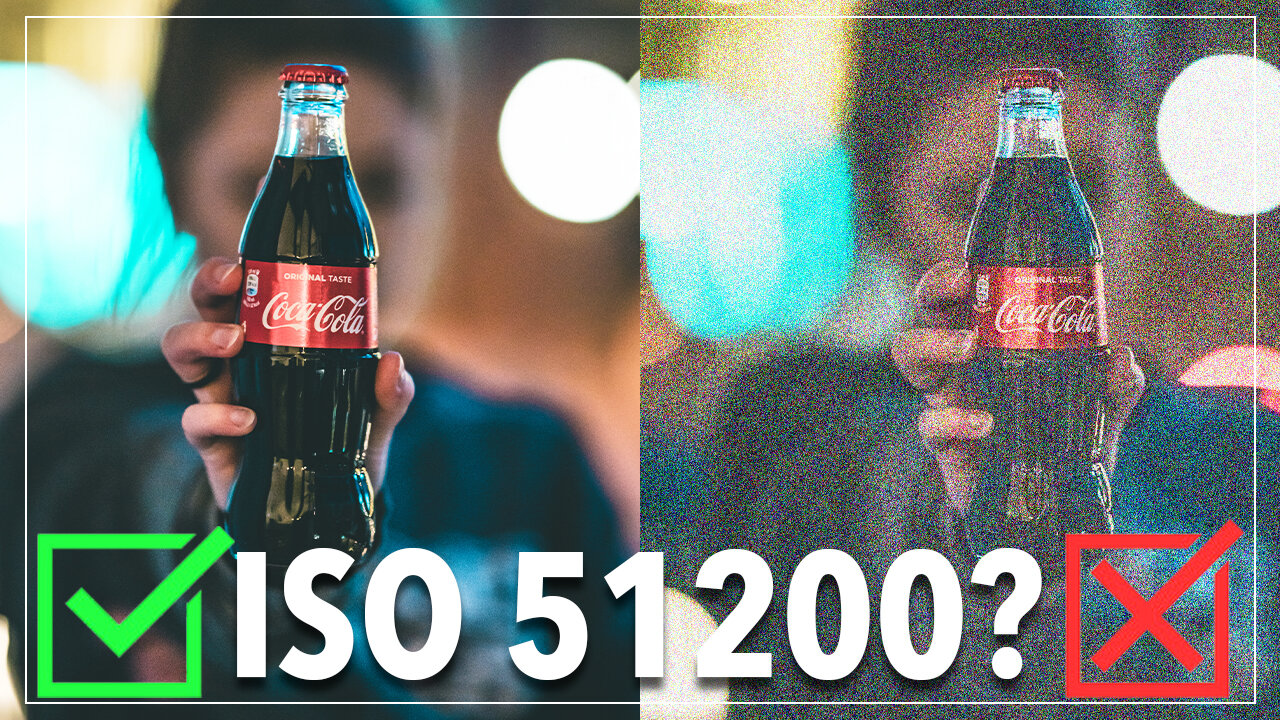
In the previous articles we talked about shutter speed and aperture, so now comes the time to discuss ISO
In today’s article I will explain why you sometimes get grain or noise in your pictures. Looking for clues of what ISO is, wikipedia, as usual, gives us with a not-so-comprehensible definition.
Film speed is the measure of a photographic film's sensitivity to light, determined by sensitometry and measured on various numerical scales, the most recent being the ISO system. A closely related ISO system is used to describe the relationship between exposure and output image lightness in digital cameras.
-Wikipedia.
There is no photographic film in my camera, and I don’t think they mean the camera’s function to shoot films. Trying to figure out this ISO mystery, let’s think about a situation when you find yourself on a sunny beach. You probably don’t want to leave the beach looking like a tomato. because human skin is quite sensitive, you use a sunscreen – a UV filter with SPF (sun protection factor) of 10, 20, or 50.
If you cover your body’s left side with an SPF of 10, and the right side with and SPF of 50, you’ll see that after some time (shutter speed – a time of your exposure to the sun) one side will be more tanned than the other. This means that your skin’s level of protection depends on the filter you used.
Likewise, ISO is somewhat of a sunscreen that determines the sensitivity of your camera’s sensor – with adding the ISO value, the sensitivity also increases.
It may be useful, because when the lighting is poor increasing ISO can brighten up your photo. Of course, it is not without a cost and there are consequences for a constant ISO increase.

ISO 2000 - Shot on Sony A7III
Using ISO to brighten up your photo may lead to grain and you will get the worst quality when ISO is the highest.
As you can see in the pictures, adding ISO makes the grain more and more visible, and you can eventually end up with a useless photo.
It’s difficult to clearly say on which ISO value your picture will look so bad that you would be ashamed to show it to the world. It depends on the size and the quality of your camera’s sensor, and also on your personal preferences – for sure there are people who like a little grain here and there.

ISO 51200 - Shot on Sony A7III
But, if you don’t want noise in your pictures, you should remember to keep ISO as low as possible and, most importantly, you should get to know the capabilities of your camera – check to which level of grain and ISO you can be happy with your photos, because this level may be different in every camera.
I guess that’s all about ISO and if you’re up to date with my articles, you already know the three basic camera functions which are shutterspeed, aperture and iso. If you have not yet seen my previous articles, make sure to read them in my blog section! :)