
In relation to my previous article comes the time for a short <and comprehensible> one about basic camera features, and this time we’ll talk about aperture
In today’s article I’ll put you right on what aperture is and what it is for. Of course, there are many films on the Internet that explain aperture, so why would anyone do a next one? Hm…
Grab your lens and look inside. You will see that aperture is an element constructed with metal leaf-like pieces. These pieces determine how much light comes inside, depending on the settings. So, aperture is like a shield from the light.
Do you remember the cyclops from my video about shutter speed? If you think about your camera as a one-eyed guy, setting aperture is basically like making the cyclops squint his eye. Let me explain.
You’re not able to stare at the sun with your eyes wide opened. You squint them so the sun doesn’t blind you. So, you reduce the light’s access to your eye. The same happens with aperture, you set it to be more closed to block some of the light.
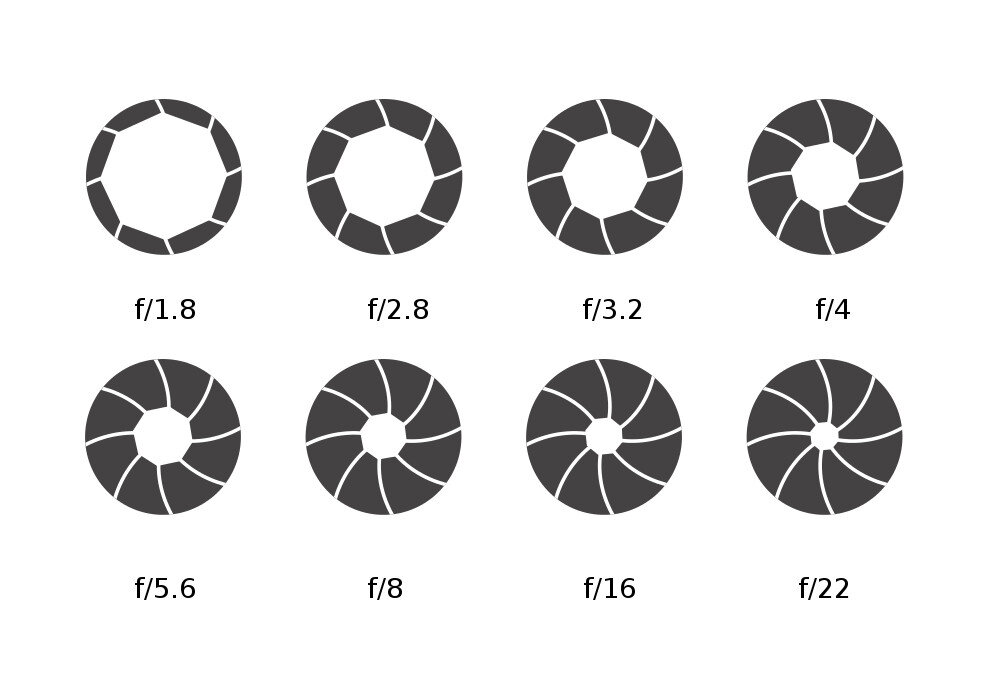
Since we know what aperture is, now comes a question – what is the magical F letter that refers to aperture’s value? It is the ratio of focal length to the diameter of the aperture opening. To make it simple, with 50mm lens and F1 value, the hole will have 50mm. It means that if you close aperture and make the Fstop bigger, the less light will come through and your picture will be darker. Now we can get to aperture’s first function which is brightness.
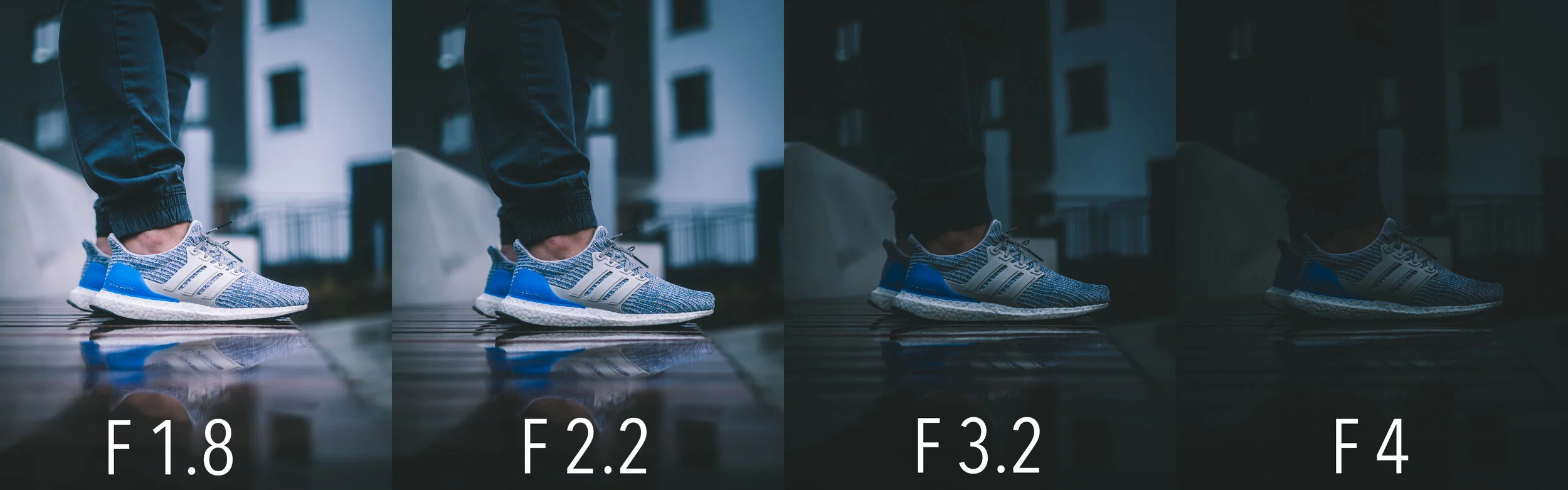
This brightness is very easy to understand. As an example here, we’ll use a lens of maximum brightness F1.8 – as you can see in the pictures, the bigger the value of aperture, the darker the pictures are.
It means that if we’re taking photos in poor lighting, we should use the brightest lens possible. But, wouldn’t it be easier to set the lens to the lowest value and just don’t worry about it? Not really, because let’s not forget about the second function of aperture which is depth of field!
Going back to the eye-example. You don’t squint your eyes only when you're blinded by the light, but also when you’re trying to focus your sight on something. So when aperture is opened to its maximum, you get low depth of field – which means you are able to get bigger bokeh in front of or behind your object. As you can see in the pictures, the blur diminishes when the aperture’s value is getting bigger.
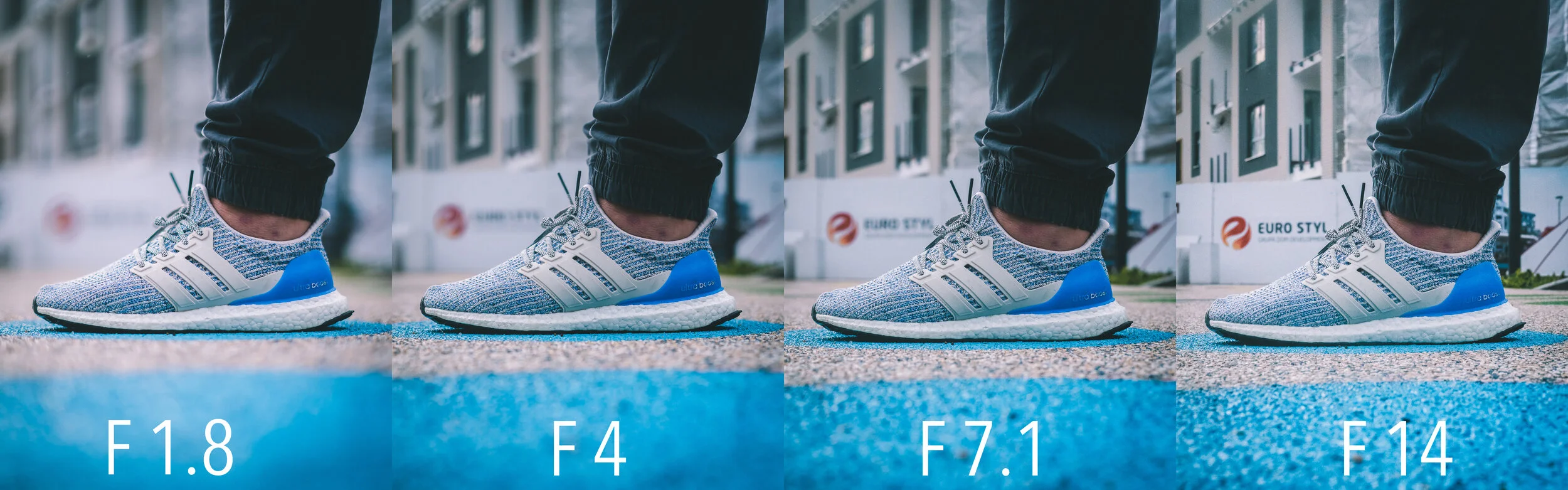
A strong blur is great when you want the object of your picture to be separated from the background, for example in a portrait. But, when you are shooting a landscape, you would rather have as many sharp elements as possible. Of course, to get a dope blurry background you’ll need a few more elements, but you can check them out in my other article
Now You know how to set aperture to achieve different results. Obviously, with a higher brightness of a lens comes also a higher price tag. What if it’s dark and despite setting the lens as bright as you possibly can the picture still comes out dark? If you can’t afford an expensive super-bright lens, don’t worry because You can still work some things out. One of the answers is ISO but we will talk about it in the next article!
I hope you’re one step closer to using your camera with more awareness. Have a good day! :)